
taste-skill
An anti-AI-aesthetic skill that prevents agents from producing generic purple-gradient interfaces. Sponsored by Vercel.

Suggested prompts
About this skill
Taste Skill
Portable Agent Skills that upgrade AI-built interfaces: stronger layout, typography, motion, and spacing instead of boilerplate-looking UIs. This repo also includes image-generation skills for reference boards (web, mobile, brand kits). Pair them with ChatGPT Images or similar generators, then hand the frames to Codex, Cursor, or Claude Code for implementation.
Disclaimer
Taste Skill has no official token, coin, or crypto project. Any token using my name, image, or project is unaffiliated and not endorsed by me.
Skills
Each skill does one job; you do not need all of them at once. Implementation skills output code. Image-generation skills output reference images only.
| Skill (folder) | Description |
|---|---|
| taste-skill | 🆕 v2 (experimental) - substantial rewrite of the default skill. Reads the brief, infers the design language, tunes three dials (VARIANCE / MOTION / DENSITY). Brief inference, design-system map, hard em-dash ban, canonical GSAP code skeletons, redesign-audit protocol, strict pre-flight check. Actively iterating toward v2.0.0 stable. |
| taste-skill-v1 | The original v1 of taste-skill, preserved for projects depending on its exact behavior. Use only if the v2 default breaks something specific in your workflow. |
| gpt-tasteskill | Stricter variant for GPT/Codex: higher layout variance, stronger GSAP direction, aggressive anti-slop. |
| image-to-code-skill | Image-first pipeline: generate site references, analyze them, then implement the frontend to match. |
| redesign-skill | Existing projects: audit the UI first, then fix layout, spacing, hierarchy, styling. |
| soft-skill | Polished, calm, expensive UI with softer contrast, whitespace, premium fonts, spring motion. |
| output-skill | When the model ships half-finished work: full output, no placeholder comments. |
| minimalist-skill | Editorial product UI (Notion/Linear vibes), restrained palette, crisp structure. |
| brutalist-skill | Hard mechanical language: Swiss type, sharp contrast, experimental layout. |
| stitch-skill | Google Stitch-compatible rules, including optional DESIGN.md export format. |
Image generation skills
These produce design images only (no code). Use with ChatGPT Images, Codex image mode, or any agent that generates images.
| Skill (folder) | Description |
|---|---|
| imagegen-frontend-web | Website comps: hero, landing, multi-section with strong typography, spacing, anti-slop art direction. |
| imagegen-frontend-mobile | Mobile screens and flows: iOS/Android/cross-platform, mockups, readable type, coherent sets. |
| brandkit | Brand-kit boards: logo directions, palettes, type, identity applications across categories. |
Which one should I use?
- Start with taste-skill for the safest general default. (Now v2 experimental - see what changed in the CHANGELOG.)
- If you depend on the exact behavior of the original taste-skill, choose taste-skill-v1 instead.
- Use gpt-taste when you want the stricter GPT/Codex-oriented rules and motion/layout enforcement.
- Use image-to-code-skill for image → analyze → code website workflows.
- Use redesign-skill to improve an existing codebase instead of greenfield styling.
- Add soft-skill, minimalist-skill, or brutalist-skill when the visual direction is already chosen.
- Add output-skill if the agent keeps truncating output.
- Use imagegen-frontend-web, imagegen-frontend-mobile, or brandkit when the deliverable is images (comps, flows, identity boards), then pass results to your coding agent.
Image-first tip
For image-to-code-skill, state the pipeline in the prompt, e.g.: follow the skill: generate images, then analyze, then code.
ChatGPT Images and Codex
Attach or paste imagegen-frontend-web, imagegen-frontend-mobile, or brandkit and ask for the frames you need, then feed the renders to Codex, Cursor, or Claude Code. Use image-to-code-skill when you want one workflow that both generates references and implements the site in code.
Settings (taste-skill only)
Numbers at the top of the file are 1-10 dials:
- DESIGN_VARIANCE: Layout experimentation (lower: centered/clean · higher: asymmetric/modern).
- MOTION_INTENSITY: Animation depth (lower: hover · higher: scroll/magnetic).
- VISUAL_DENSITY: Information per viewport (lower: spacious · higher: dense dashboards).
Examples
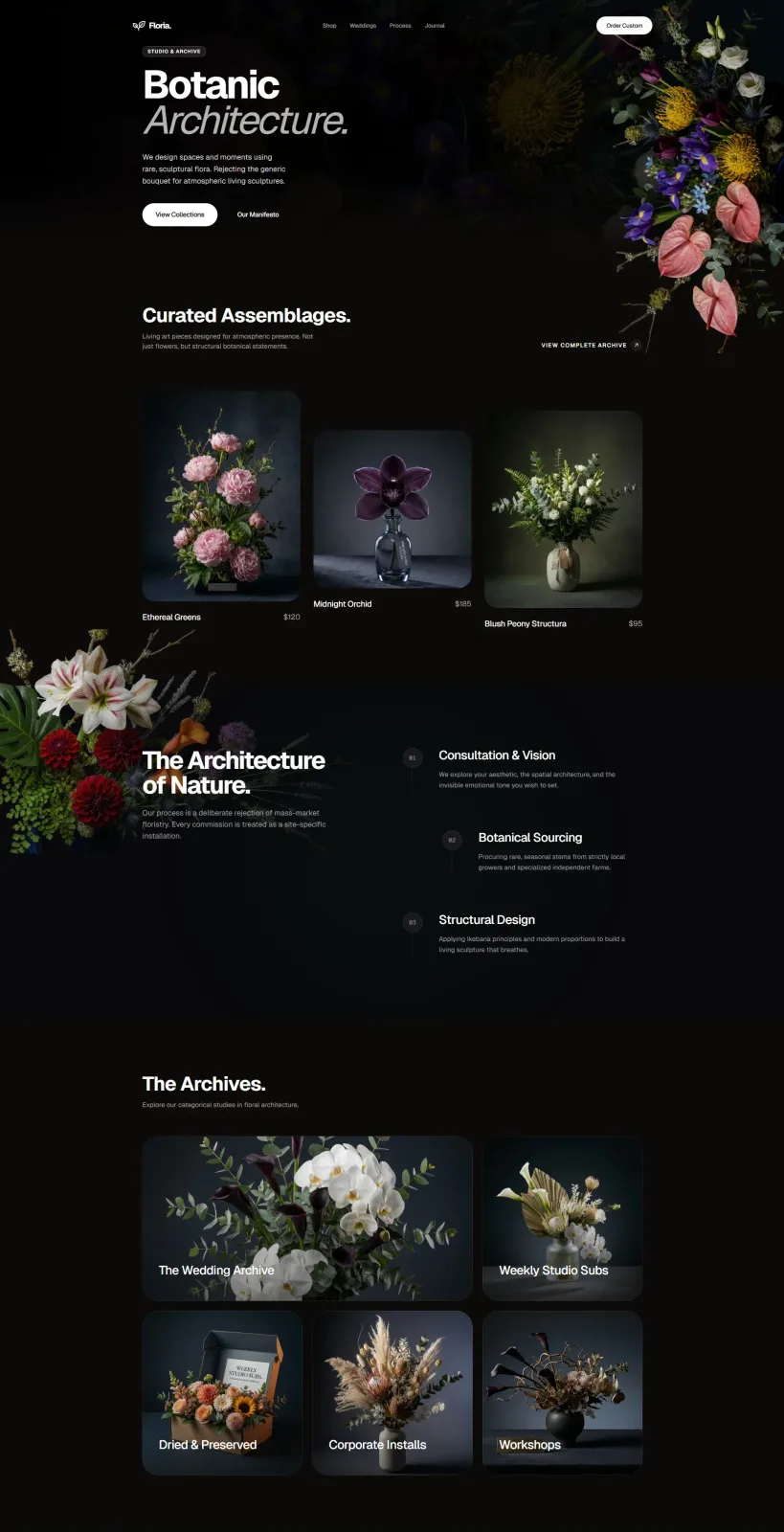
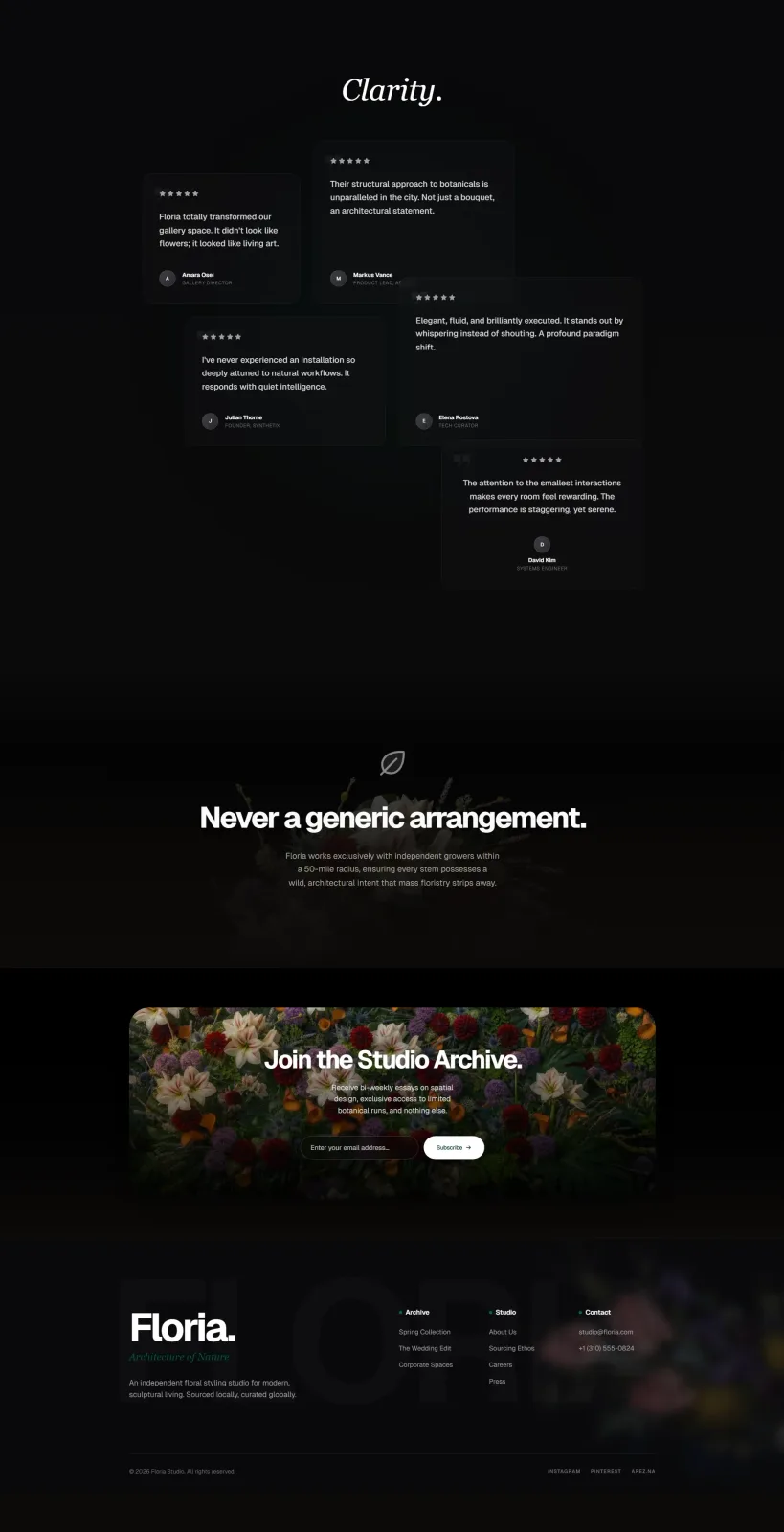
Created with taste-skill:
Common Questions
How is this different from other AI design skills?
Multiple specialized variants, adjustable dials in key skills, anti-repetition rules informed by dedicated research. All are framework agnostic across major coding agents.
Does it work with React, Vue, Svelte?
Yes. Rules target design intent, not a single framework API.
What is SKILL.md?
A portable instruction file agents can load automatically; you can add it to your project by copying into a repo or pasting into conversations.
Do image-generation skills come with this bundle?
Yes. They live under skills/ alongside the code skills, so the same mechanism discovers them.
License
MIT License · Copyright (c) 2026 Leonxlnx