
Kami
A document design system with nine templates, CJK optimization, and Markdown-to-PDF output.

Suggested prompts
About this skill
Kami
Kami (紙, meaning paper in Japanese) is a quiet design system for AI agents, ensuring every document you generate is professional, consistent, and actually pleasant to read—not another gray, flat layout.
Use Cases
- When you need AI to produce resumes, one-pagers, long documents, letters, portfolios, slide decks, equity reports, changelogs, or landing pages.
- When you want all your AI-generated documents to share a cohesive, polished look.
- Supports English, Chinese, Japanese, and Korean.
Showcase
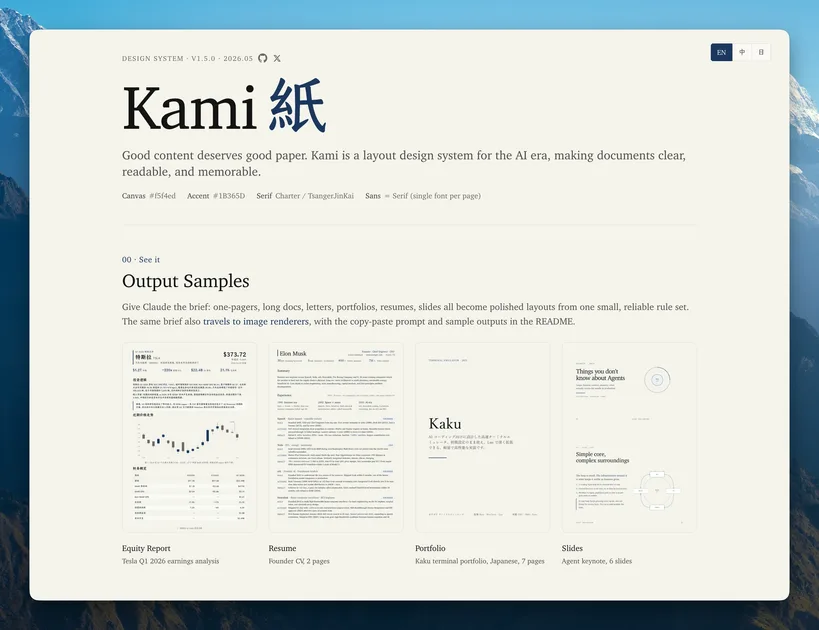
Below are real PDFs generated with Kami’s default style, across templates and languages.
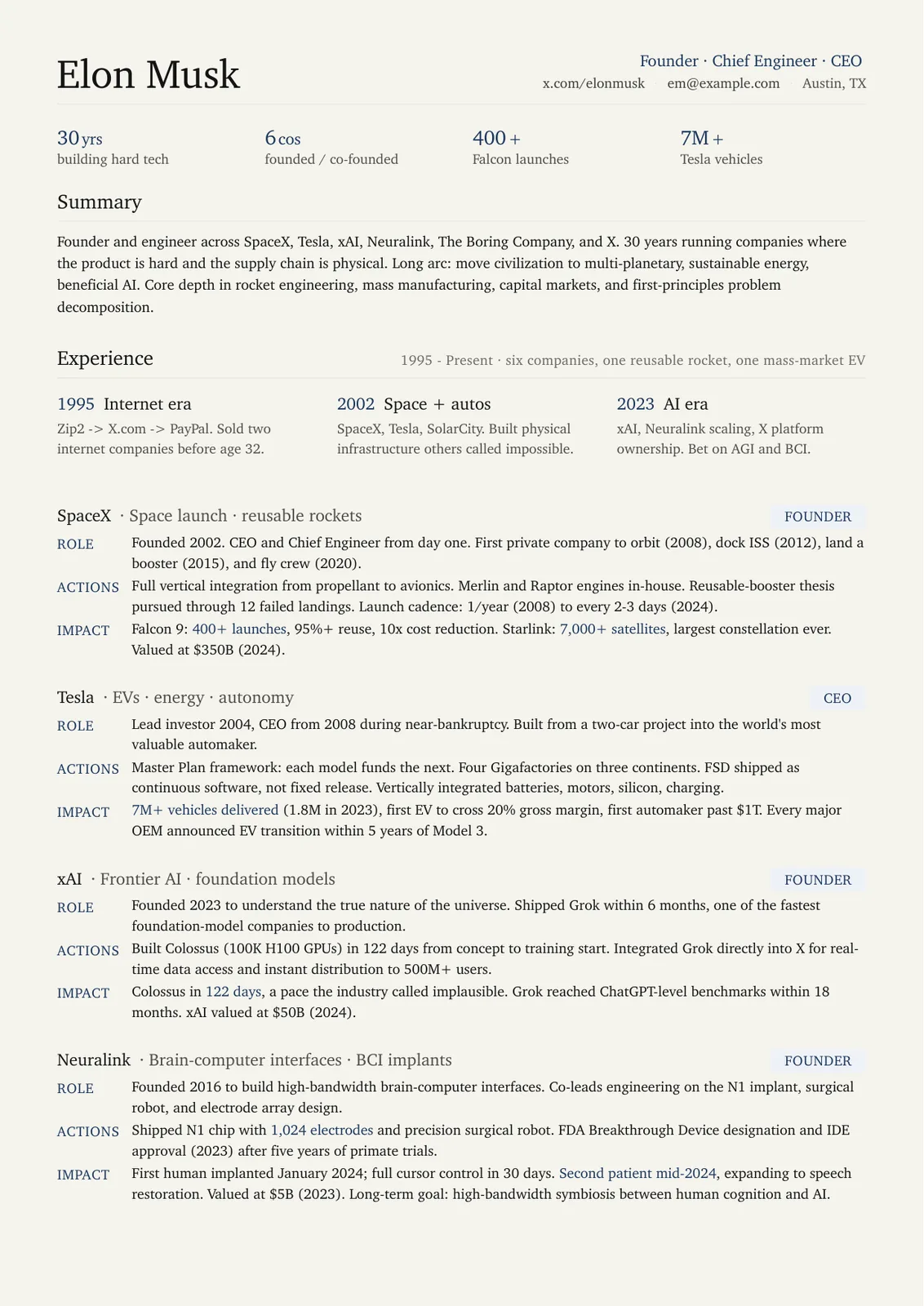
Resume · English Founder resume, 2 pages |
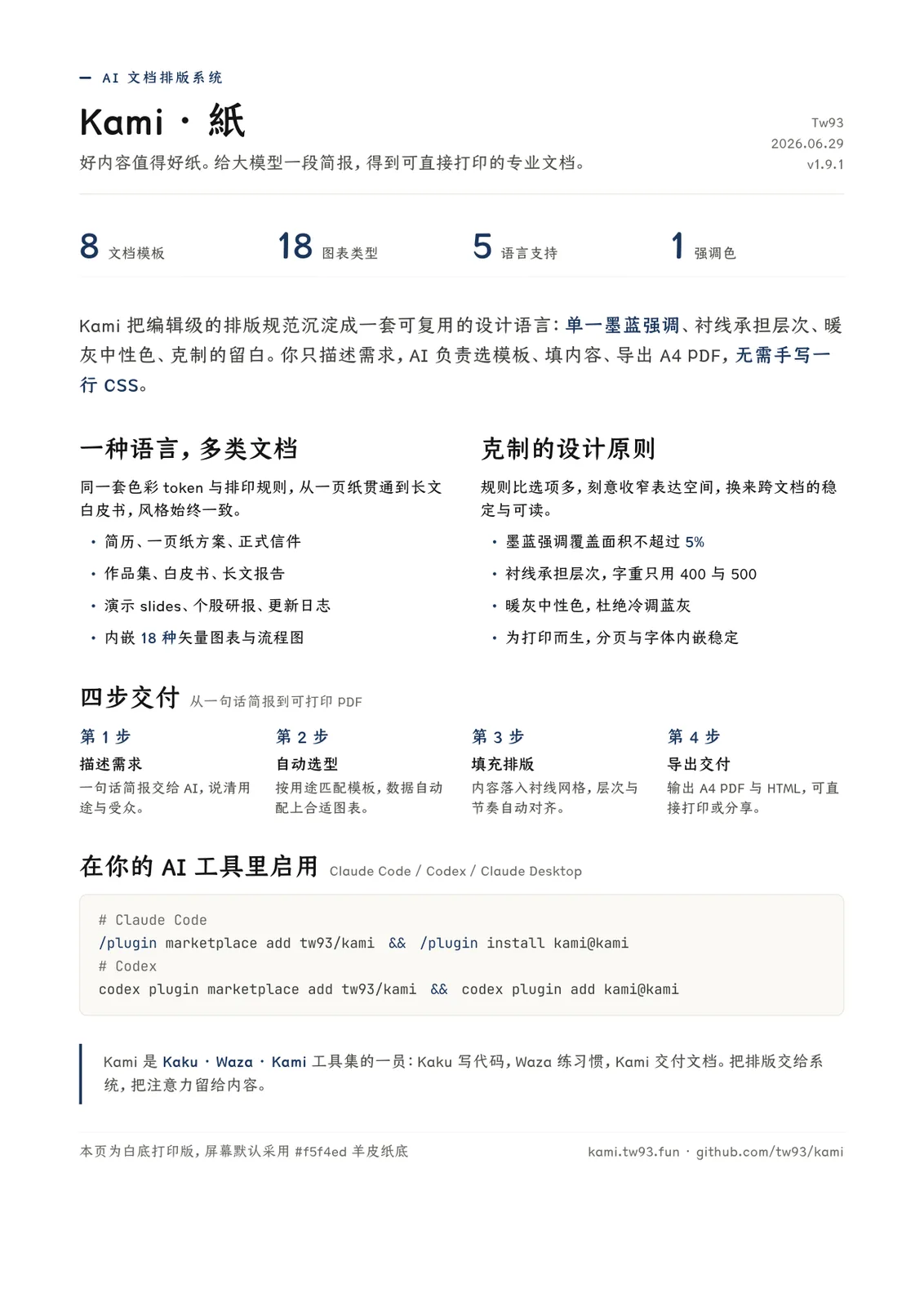
One-Pager · 中文 Kami intro · white paper print variant |
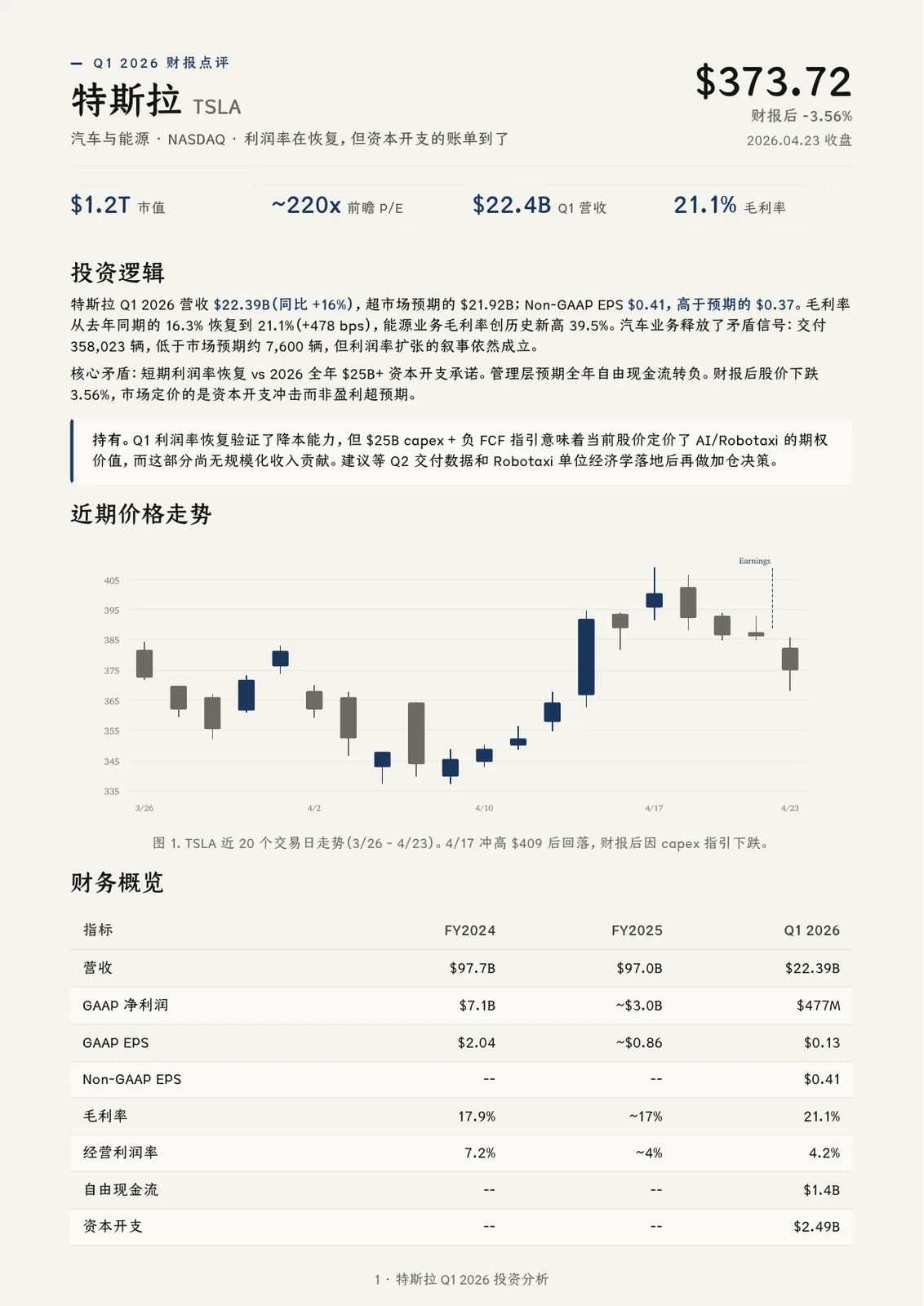
Equity Report · 中文 Tesla Q1 2026 earnings review |
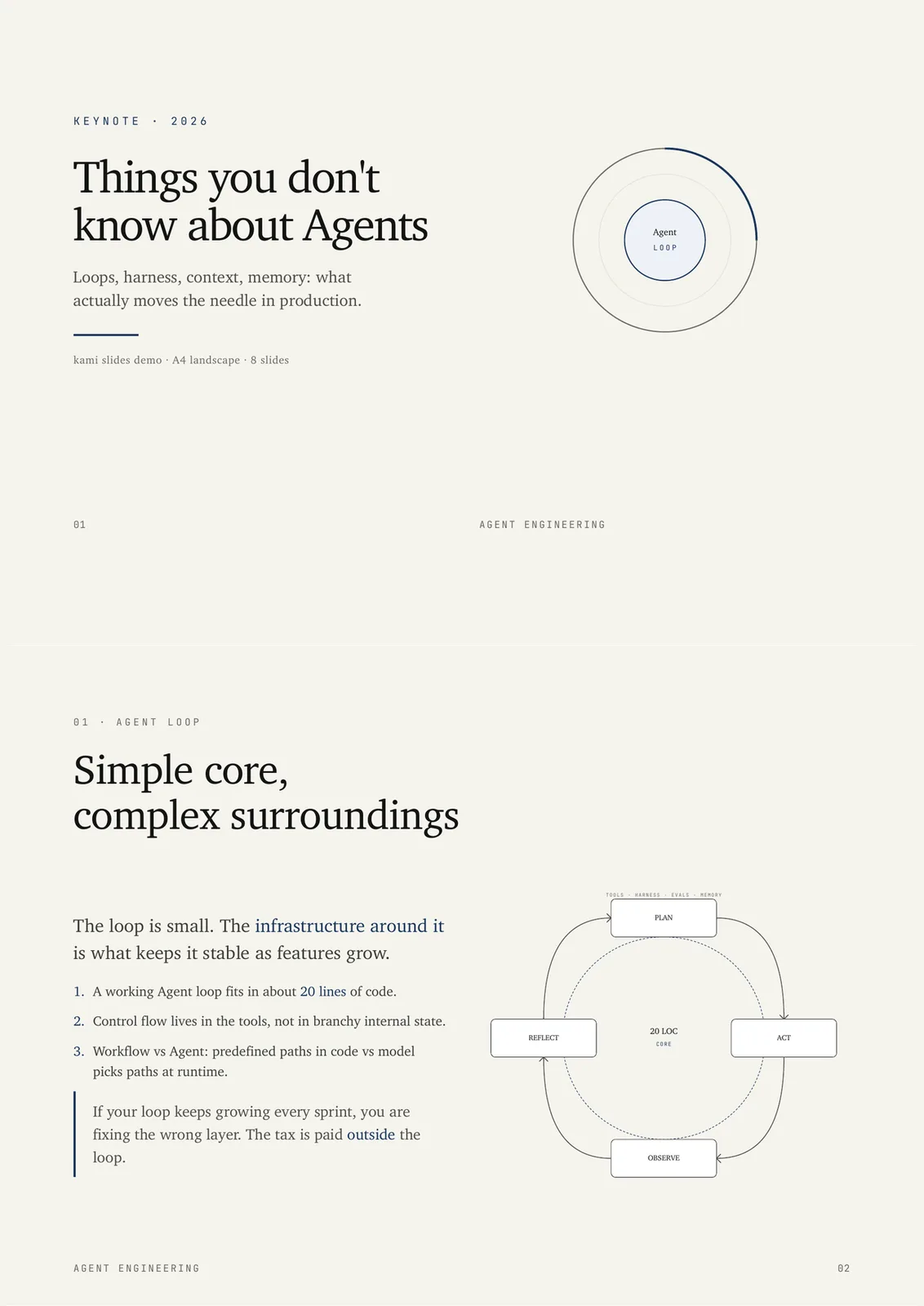
Slides · English Agent keynote, 8 slides |
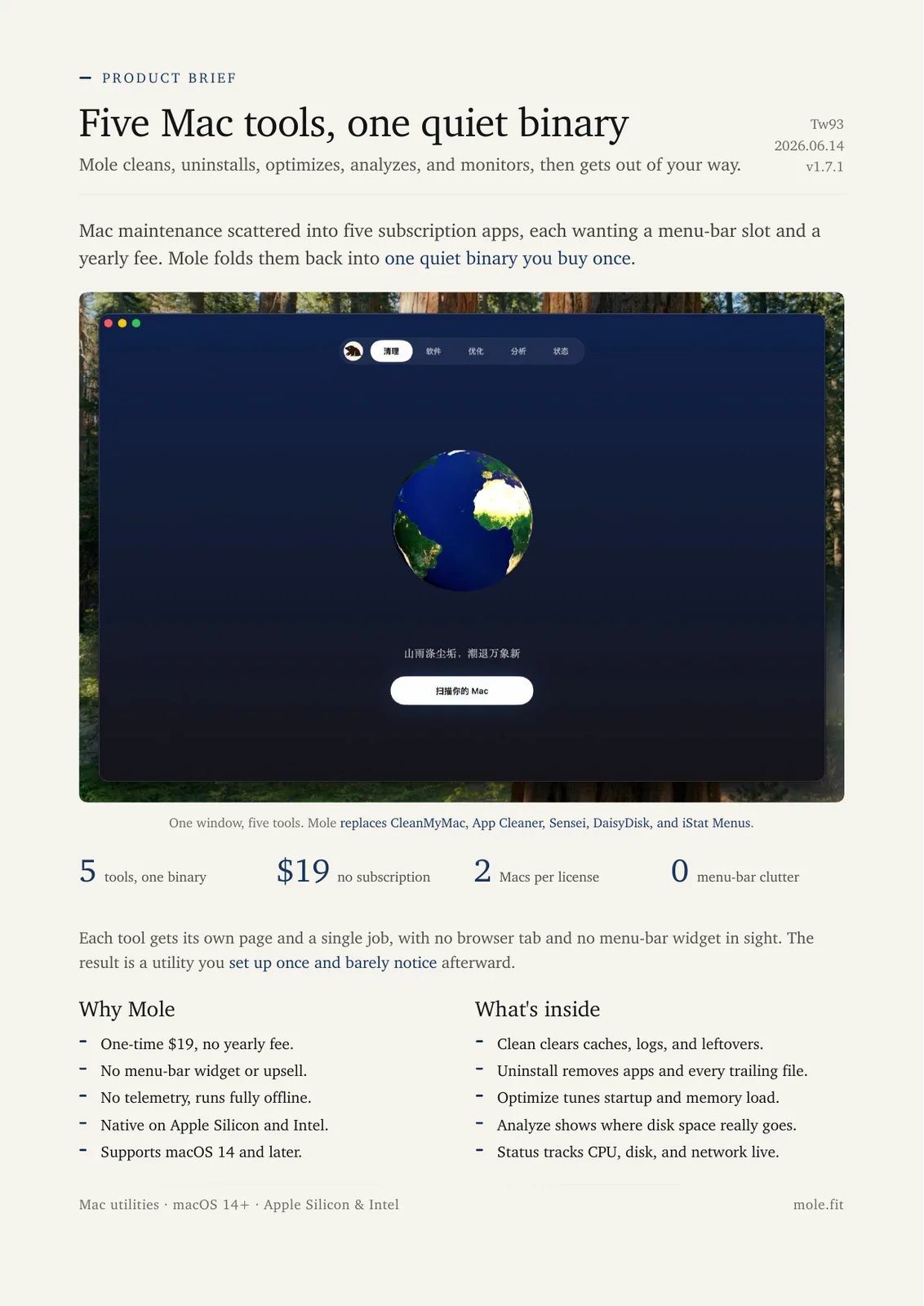
One-Pager · English Mole product brief, 1 page |
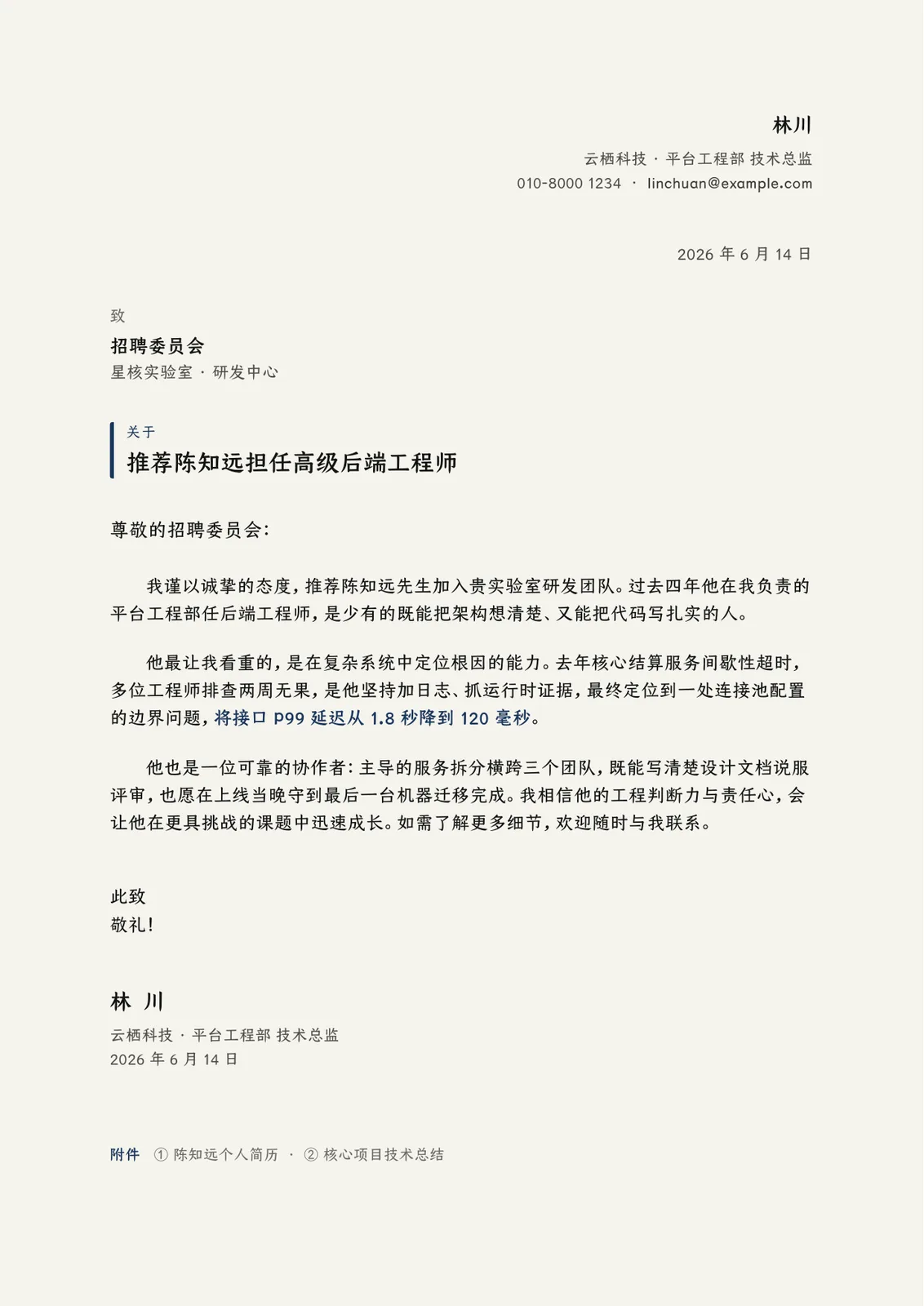
Letter · 中文 Recommendation letter, 1 page |
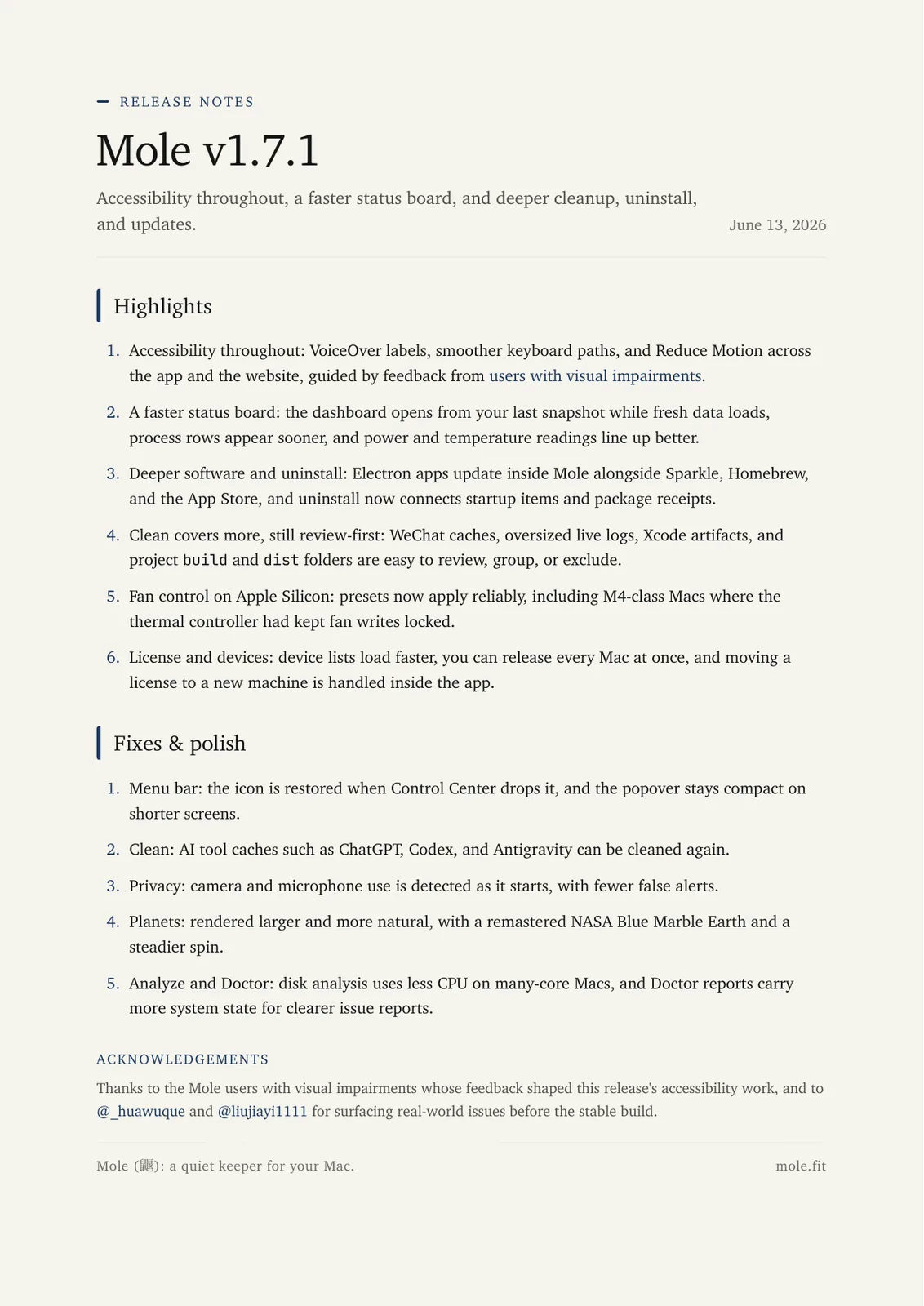
Changelog · English Mole v1.7.1 release notes |
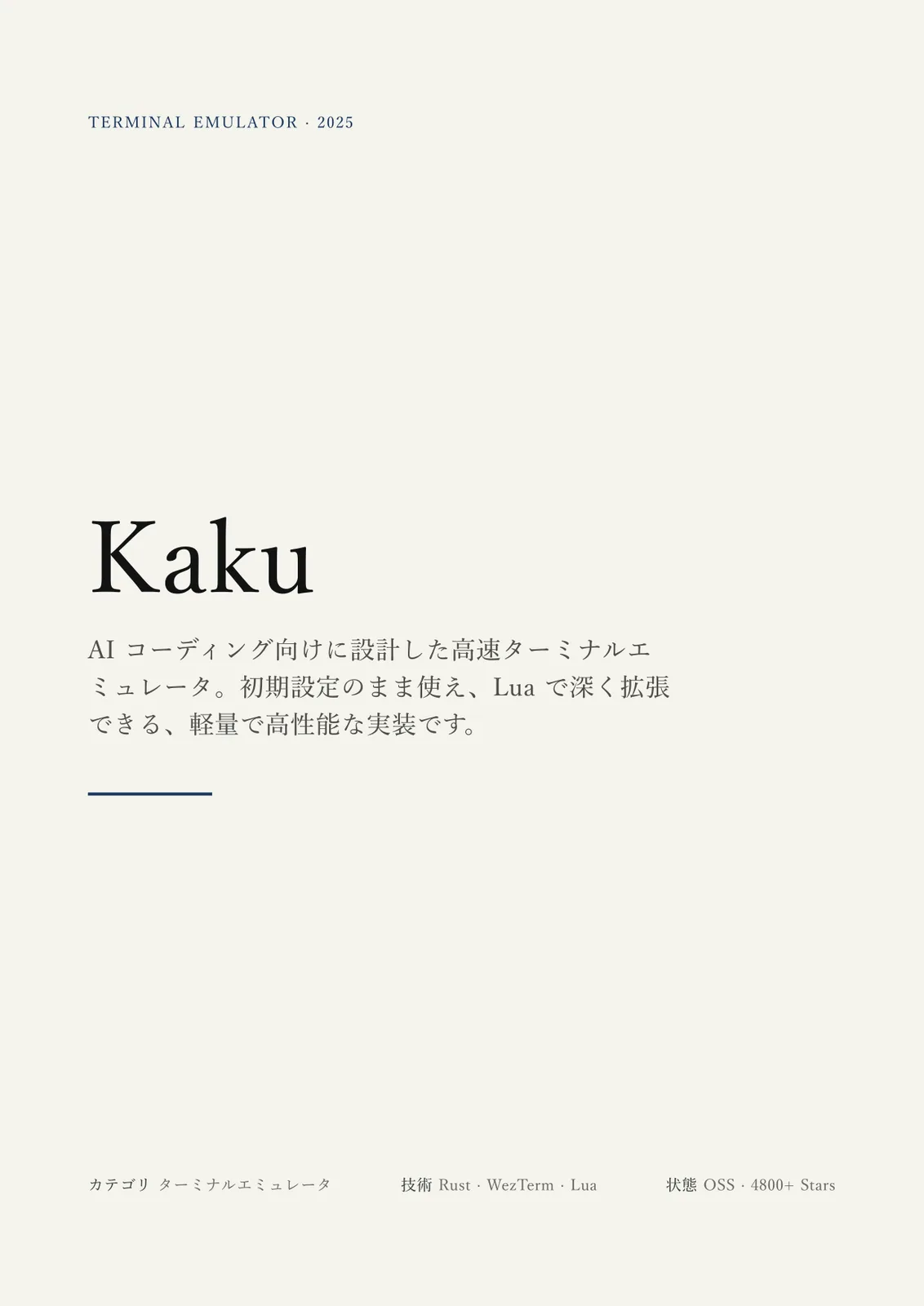
Portfolio · 日本語 Kaku terminal portfolio · 7 pages |
Core Capabilities
- 8 document templates: One-Pager, Long Doc, Letter, Portfolio, Resume, Slides, Equity Report, Changelog, plus a Landing Page system.
- 18 inline SVG diagram types, including support for Mermaid-based sequence, class, and ER diagrams, auto-styled to Kami’s palette.
- Slides: render to PDF (WeasyPrint HTML), editable PPTX (python-pptx), or Marp Markdown decks.
- Optional syntax highlighting via Pygments; code still renders as monochrome without it.
- Deterministic quality gates: per-type structure checks, coverage verification, and visual page review.
- Zero-dependency MCP server that exposes render, check, and screenshot tools for MCP-capable agents.
- Print variants: warm parchment (default) or white-paper background for home/office printing.
- Multilingual with dedicated serif fonts for each language.
How It Works
- Describe the document you want in natural language.
- Kami picks the right template and applies design constraints (color, typography, spacing).
- It generates a PDF (or other requested format) after quality checks.
- For landing pages, it produces a deployable website and can output an image-generation brief for matching illustrations.
What You Need to Provide
- A natural language request describing the document.
- (Optional) Brand profile at
~/.config/kami/brand.mdwith structured fields like name, role, color, language, page size, and tone.
What You Get
- A consistently styled, professional PDF document.
- Depending on your request, also an editable PPTX, Marp slide deck, or a ready-to-deploy landing page.
Usage Examples
make a one-pager for my startupturn this research into a long docwrite a formal lettermake a portfolio of my projectsbuild me a resumedesign a slide deck for my talkmake this talk as a Marp deckbuild a landing page for my app
Design Philosophy
Kami is not a UI framework but a constraint system for printed matter. A warm parchment canvas #f5f4ed, a single accent ink blue #1B365D, serif typography for hierarchy, no harsh shadows or flashy palettes. Pages read as composed pages, not dashboards.
Beyond Documents
The same constraints apply to web and image: Kami can generate multilingual landing pages and output a style brief for any image model to produce matching illustrations.
Example landing pages:
Image generation brief:
Redraw this as a clean editorial diagram. Background: warm parchment (#f5f4ed), never pure white. One accent only, ink blue (#1B365D); everything else in warm gray with a yellow-brown undertone, no other colors. Thin single-line geometric strokes and simple flat icons. No gradients, no drop shadows, no 3D. Labels in a serif typeface. Generous whitespace, calm and composed, like a figure in a well-typeset report.
(Rendered by ChatGPT Images in a single pass with no manual touch-up.)
Background
The author frequently asked Claude to write equity research reports, but outputs looked inconsistent and hard to scan. By iterating on typography, color, and spacing, the reports became genuinely pleasant. Later, preparing a presentation added inline SVG charts, a unified warm palette, and a tighter editorial rhythm, which eventually grew into Kami: a design system trusted to give any agent a steady hand.
Notes
- Font licensing: The Chinese font TsangerJinKai02 is free for personal use only; commercial use requires a license from tsanger.cn. Charter, YuMincho, and Source Han Serif K are under OFL or system-bundled open licenses.
- The MCP server renders only trusted local HTML.
- Kami checks for updates at most once daily by reading a public version file; no data is sent.
License
Kami’s code and templates are under the MIT License. Fonts carry their own licenses; please note the commercial-use restriction for TsangerJinKai02.